Imagine you’re building an app that works on your laptop, your friend’s phone, and even a smart TV. Writing separate code for each device would be tiring, right? That’s where Java comes in to make things easy!
Java makes coding simple with its powerful features like works on all devices (Platform Independence), easily movable (Portability), Write Once, Run Anywhere (WORA), and not tied to any hardware (Architecture Neutrality).
Platform Independence (Works on All Devices)
Java’s biggest strength is its ability to run on any device without changes. You can write your code on one computer and run it on another without rewriting anything.
How Does it Work?
- When you write and save your Java code, it turns into a common format called bytecode (universal code).
- Bytecode is like a universal language – it doesn’t depend on your computer type.
- A tool called the Java Virtual Machine (JVM) reads the bytecode and tells the computer what to do.
Example:
- Write a Java program on Windows.
- Convert it to bytecode.
- Use the same bytecode to run the program on Linux, macOS, or Android.
Simple Analogy:
Bytecode is like a movie script that the JVM can perform on any device.
Why It’s Helpful:
- Write your code once and use it anywhere.
- Saves time and effort for developers.
Portability (Easily Movable)
Java is a portable programming language, allowing your Java program to run on any device. It’s like carrying a PDF file – it looks the same no matter where you open it.
Why is Java Portable?
- Bytecode stays the same for every platform.
- The JVM on each computer translates the program to fit that specific device.
Real-Life Example:
Imagine writing an email. It looks the same whether you open it on your phone, laptop, or tablet. Java programs work similarly.
Why It’s Important:
- Developers can create software that works everywhere.
- It reduces extra effort when moving programs to other devices.
Write Once, Run Anywhere (WORA)
Java’s famous feature is WORA, which means you write your code one time, and it works on all devices with a JVM.
How Does It Work?
- Write your Java program on any computer.
- Convert it to bytecode.
- Use the bytecode to run your program on any device.
Example:
- A developer creates an app on Windows.
- Without making any changes, that app runs smoothly on Linux, macOS, or Android.
Simple Analogy:
Think of a universal charger. You can use it with any phone, no matter the brand. That’s how Java works – it adjusts to every device.
Why WORA Saves Time:
- No need to rewrite code for each platform.
- Makes Java ideal for apps that need to work everywhere.
Architecture Neutral (Not Attached to Hardware)
Java doesn’t depend on any specific hardware or processor. It works on all devices, whether they’re old or new.
How Does It Work?
- Java programs are turned into bytecode, which works on any device.
- The JVM adjusts the bytecode for your device.
Real-Life Analogy:
A USB drive works on any computer – Windows, Mac, or Linux – because it follows a universal standard. Java is like that USB drive – it works anywhere.
Why This Feature Matters:
- Java programs stay compatible even as technology changes.
- No hardware or processor limitations.
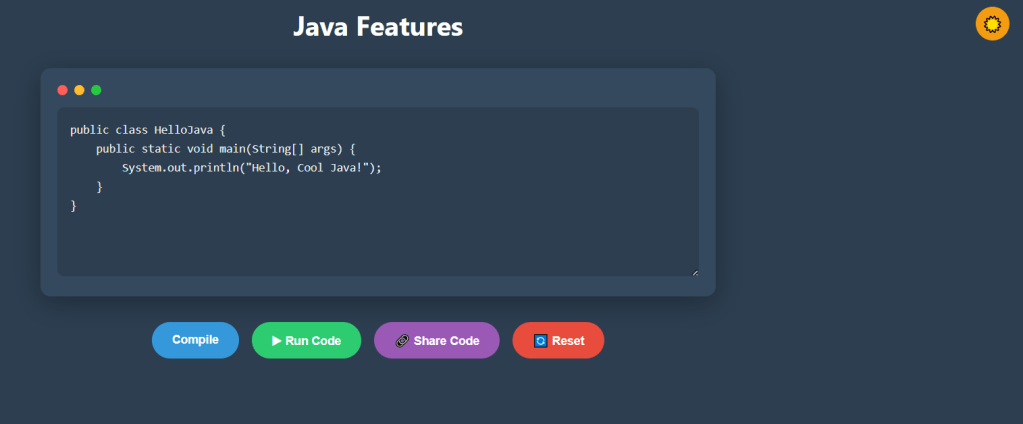
👇 Click this image below, see the demo:
Key Points to Remember
- Platform Independence: Write once, run anywhere with JVM.
- Portability: Carry your code and run it anywhere Java is installed.
- How Java Works: Java uses bytecode and JVM to make your program platform-independent.
- Architecture Neutral: Bytecode doesn’t depend on any specific hardware or operating system.
Quick Summary
- Works on All Devices: Java programs run anywhere with a JVM.
- Easily Movable: You can move Java programs across systems without changing them.
- WORA: Write your program once, and it works everywhere.
- Not Tied to Hardware: Java works on all devices, no matter the processor or system.
Conclusion
Java makes programming easy and fun. Whether you’re building a mobile app, a website, or an enterprise tool, Java’s flexibility helps you work faster and smarter. Keep practicing and see how Java turns your ideas into powerful programs. The more you experiment, the more you’ll love coding in Java!


Leave a comment